image: "/blog/beyond-mirror-representation-muslim-girls-identity-hero.webp" title: "Representation Is Not Enough — Muslim Girls Need to See Themselves Doing Things" description: "The conversation about Muslim kids in media has moved past 'does representation exist?' to 'does it actually mean something?' What that shift looks like for hijabi sticker books and the girls who play with them." date: "2026-05-27" slug: "beyond-mirror-representation-muslim-girls-identity" category: "Representation" tags:
- Muslim girls representation
- hijabi sticker books
- modest toys Muslim kids
- Muslim girls identity
- screen-free Islamic activities
The conversation shifted
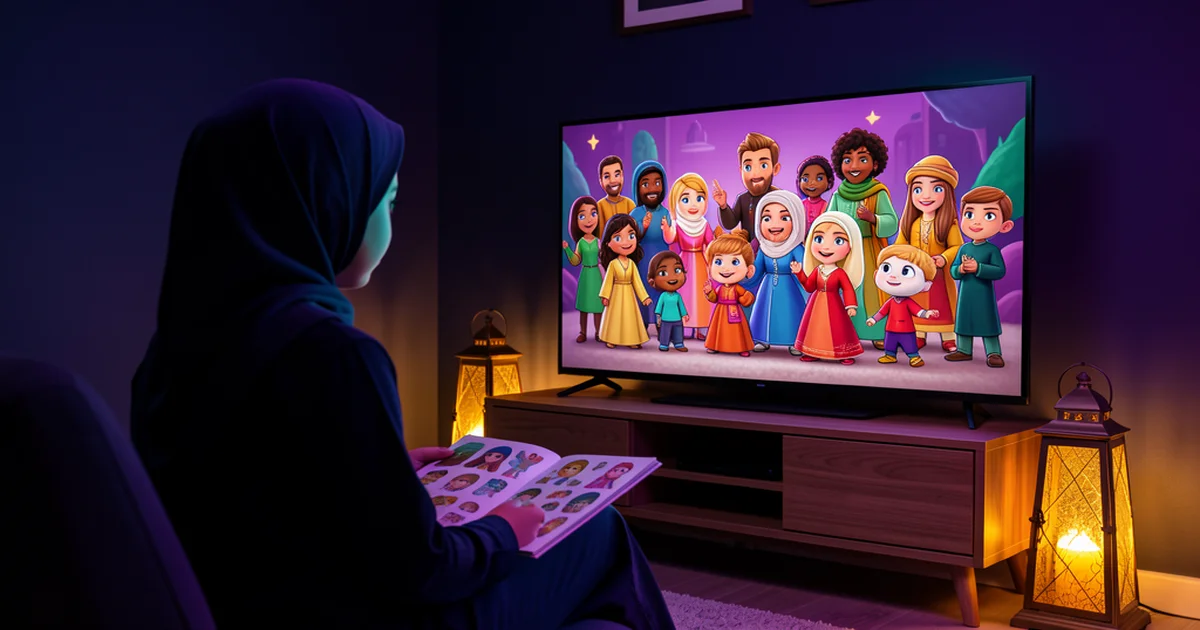
A few weeks ago, MuslimMatters published a piece that caught my attention. The argument was straightforward: the Muslim community spent years pushing for kids to see themselves reflected in media — same names, same dress, same skin tones. That push worked. You can now find hijabi characters in picture books, cartoons, and toy aisles in ways you couldn't five years ago.
But the piece asked a harder question: now that we're on the page, what are we doing there?
It's one thing for a character to wear hijab. It's another for a Muslim girl to open a book or a toy and think "that's me, and I can do that." The difference matters. One is a mirror. The other is a window.
What mirror representation looks like in practice
My daughter Blair went looking for sticker books to give her friends at the masjid. She checked Target, Barnes & Noble, craft stores, Etsy. Every sticker book she found had characters who didn't dress like her friends. Bare shoulders, short skirts, hair uncovered. She wasn't angry about it. She was confused. "Where are the ones that look like us?"
That question is the mirror part. A kid notices who's missing from the shelf. She wants to see her own face, her own clothes, her own world reflected back. That desire is basic and human and totally reasonable.
But when Catherine said "let's make them ourselves," she wasn't just thinking about putting a hijab on a sticker. She was thinking about what those stickers would let girls do.
The window matters too
Our first book, Little Hijabi Adventures, has 50+ stickers. They're not portraits of girls standing still. They're girls exploring, running, building, playing. The scenes are everyday — parks, bedrooms, school hallways — because Muslim girls live everyday lives. They're not exotic. They're not tokens. They're kids doing kid things while wearing hijab.
The Beautiful Hijabi book lets girls ages 5 and up mix and match faces, hijab styles, and outfits. It's not "pick your modest outfit." It's creative play. The same kind of play every other kid gets with every other sticker book — except these characters look like someone real to the girl holding it.
And Modest Hijabi Fashion, for ages 8+, goes deeper into fashion coordination and style. Because Muslim girls care about fashion. They have opinions about color and pattern and layering. They deserve a space to explore that without being told "you can't care about clothes and be modest."
What parents are actually saying
I've been paying attention to the Muslim parenting space online. @growingfaithfulhearts on Instagram posted recently: "As women raising Muslim girls, we want to raise daughters who are grounded in their faith and haya, but also aware and confident."
That post got hundreds of likes. It resonated because it names the tension a lot of Muslim parents feel. You want your daughter to be rooted in her faith. You also want her to walk into any room in America with her head high. Those goals don't contradict each other, but they're hard to pull off simultaneously, especially when the culture around her sends mixed signals.
Screen-free activities help. We hear from parents who want their kids off tablets but still engaged in something meaningful. Sticker books sit in that sweet spot — hands busy, imagination running, no screen involved. The Beautiful Hijabi App exists too, and we built it with the same philosophy. $2.99 once, no ads, no subscriptions, no data tracking. It's a tool, not a trap.
Why the deeper conversation matters for toys
There's a growing market of Islamic toys now. Wooden masjid playsets, Montessori-inspired Arabic sorters, talking dolls that recite Quran. These are good products. Imaan Kidz won an Islam Channel Business Award and got stocked at John Lewis. Lala + Mo is doing Montessori toys with Muslim representation. The space is filling up.
But here's what I keep noticing: most of these products are educational. They teach. They instruct. They have a learning outcome printed on the box.
There's nothing wrong with that. My kid has Arabic alphabet blocks and a prayer-time puzzle. She learned from them.
She also just wants to play sometimes. Without a lesson attached. Without someone measuring whether she got smarter. Just... play. Dress up a character. Make a face. Pick an outfit. The same way her non-Muslim friends do with their sticker books, except she gets to see herself.
That's the part the MuslimMatters piece was getting at. Representation that stops at "you exist" isn't enough. Kids need to see themselves doing things — building, choosing, imagining, creating. Not just present in the frame, but active in it.
Where we're headed
We're building Beautiful Hijabi into something bigger than sticker books. Apps for every book. More interactive play. Eventually, we want to create a whole ecosystem where Muslim girls in the West can play and create without having to choose between "fun" and "looks like me."
The modest fashion industry figured this out years ago. It stopped asking "should Muslim women be in fashion?" and started asking "what do Muslim women want to wear?" The answer turned out to be: everything. Just modestly.
Kids' media and toys are catching up to the same realization. The question isn't "should Muslim girls have representation?" It's "what kind of representation helps them grow into confident, faith-grounded people?"
We think the answer involves giving them tools to create their own stories. Not stories about being Muslim — stories where being Muslim is just part of who the character is, and the adventure is the point.
That's what our sticker books try to do. Not teach a lesson. Just let a girl play, and see herself while she does it.