image: "/blog/when-modest-fashion-goes-global-muslim-girls-still-left-out-hero.webp" title: "Paris Modest Fashion Week Just Happened. So Where Are the Sticker Books for Muslim Girls?" description: "Modest fashion debuted at Paris Fashion Week with 30+ designers. Meanwhile, Muslim girls still can't find a sticker book with a hijabi character. Here's the gap nobody talks about." date: "2026-05-30" slug: "when-modest-fashion-goes-global-muslim-girls-still-left-out" category: "Representation" tags:
- modest fashion Muslim girls
- hijabi sticker books
- Paris Modest Fashion Week
- Muslim girls representation
- Islamic toys for kids
Paris had its first-ever Modest Fashion Week
Yesterday, 30-some designers showed collections at Paris Modest Fashion Week. Floral tulle, long cuts, headscarves paired with berets. Turkish designer Hicran Önal sent models down the runway in romantic silhouettes that a fashion editor would call "architectural." Modest fashion, in other words, made it to one of the biggest stages in the world.
I scrolled through the coverage and thought: that's real. The modest fashion industry has been growing for years — worth an estimated $300 billion globally — and now it's showing up in Paris, not just Jakarta or Dubai. Muslim women are seeing themselves in fashion editorials, on runways, in campaigns that treat modesty as a design choice rather than a limitation.
Then I thought about what Blair found when she went looking for sticker books.
The toy aisle didn't get the memo
My daughter wanted to buy sticker books as gifts for her friends at the masjid. She wasn't asking for something rare or political. She wanted the normal thing — the thing every kid gets to do — except she wanted the characters to look like her friends. Hijab, modest clothes, the works.
She checked everywhere. Target. Barnes & Noble. Craft stores. Etsy. Nothing. Not one sticker book with a hijabi girl doing normal kid stuff. Every book had bare shoulders, mini skirts, uncovered hair. Blair wasn't making a statement. She was nine years old and wanted a gift for a friend.
That was the moment Catherine said, "let's make them ourselves." And we did — three sticker books and a mobile app, built because the gap was obvious and nobody else was filling it.
Here's what's strange: the modest fashion industry just walked Paris Fashion Week, but a Muslim girl still can't walk into a store and find a sticker book where someone looks like her. The runways got the message. The children's aisle didn't.
What the modest fashion boom actually tells us
Paris Modest Fashion Week isn't an outlier. Modest wear is evolving from a religious dress code into a mainstream fashion movement. Indonesian media reported this week that modest fashion is now "sought after by various circles" — not just Muslim women, but anyone who wants elegant, covered designs. Brands like GlamLocal are positioning modest wear as a modern fashion identity. The aesthetic has gone global.
But almost all of this growth targets adult women. The modest fashion world has figured out how to dress a 25-year-old. It hasn't figured out how to play with an 8-year-old.
That's not a small miss. Muslim girls grow up seeing the women around them dress modestly. They watch their moms choose abayas for Eid, their older sisters layer for school, their aunts coordinate hijabs with outfits. Fashion is part of their world from day one. When they open a sticker book and every character is dressed in a way that's foreign to their daily life, the message isn't subtle. It says: this thing — this fun, creative, universal thing — wasn't made for you.
Representation moved. The products didn't.
There's a conversation happening right now in Muslim children's literature about moving "beyond representation." The idea, articulated well by authors like Razeena Omar Gutta, is that seeing a hijabi character on a page was step one. Step two is making sure that character has depth, agency, and a story worth telling. Not just a face on a cover, but someone your kid can actually relate to.
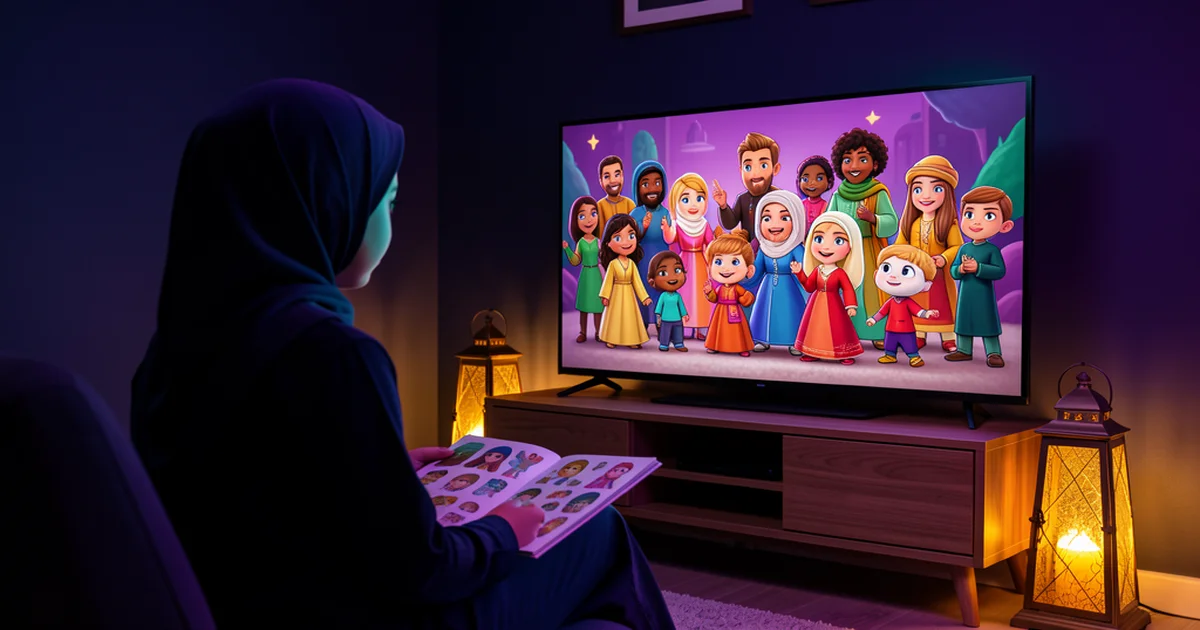
That's exactly what we were thinking when we built our books. Little Hijabi Adventures has girls running, building, exploring — not standing still in a portrait. Beautiful Hijabi lets kids mix faces, hijab styles, and outfits because creative play matters. Modest Hijabi Fashion was made for the 8-year-old who has strong opinions about color blocking and deserves a space to explore that.
These aren't political statements. They're sticker books. But they're sticker books that exist because the alternative was nothing.
What I want for my daughter and her friends
I don't need the children's toy industry to suddenly care about modest fashion week. I'd settle for this: when a Muslim girl walks into a store or opens an app, she can find something — a book, a game, a toy — where the characters look like her and live like her. Not as a novelty. Not during Ramadan only. Regularly, the way every other kid gets it.
Paris Modest Fashion Week proved that the market sees Muslim women. The next step is seeing Muslim girls. If you're here because your daughter asked the same question Blair asked — "where are the ones that look like us?" — start with our three sticker books. They were made for exactly that moment.
And if your kid is more of a screen-time person, the Beautiful Hijabi app lets her create hijabi characters on her phone. One-time purchase, no ads, no subscriptions. Just a kid making something that looks like her.